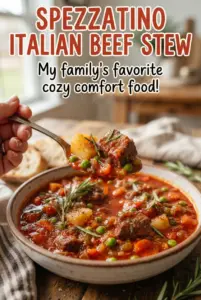
Spezzatino settles into the kind of stew you want to eat straight from the pot: tender beef, soft potatoes, peas that stay bright, and a red wine tomato broth that tastes like it simmered all afternoon because it did. The beef holds onto its shape but turns spoon-tender, and the potatoes soak up just enough of the sauce to make every bite feel fuller than the last.
What gives this version its depth is the order of the cooking. Browning the beef in batches creates the base flavor, and the wine gets reduced before the tomatoes and broth go in, so the stew never tastes thin or flat. A small amount of flour on the beef helps the broth body up naturally as it simmers, and the rosemary goes in whole so it perfumes the pot without taking over.
Below, you’ll find the timing that keeps the beef tender, the point where the potatoes should go in so they don’t collapse, and a few practical ways to adapt the stew for what you already have on hand.
The wine and tomatoes cooked down into this rich broth, and the potatoes held their shape instead of turning mushy. I served it with crusty bread and my husband went back for seconds before I even sat down.
Save this Spezzatino for the nights when you want tender beef, potatoes, and rosemary-rich tomato broth in one pot.
The Secret to Spezzatino Is Letting the Beef Brown in Batches
If you crowd the pan, the beef steams before it browns. That means pale meat, a thinner sauce, and none of the deep flavor you want in a stew like this. Brown the cubes in a single layer, even if it takes an extra few minutes, because those browned edges are what turn the broth from plain tomato sauce into something that tastes like it simmered all day.
The other trap is rushing the wine. Once it goes in, scrape up every brown bit from the bottom of the pot and let the wine reduce by half before anything else joins it. If you stop too early, the stew can taste sharp and boozy instead of rounded and savory.
The potatoes also matter. Add them after the beef has already become tender so they hold their shape, not at the beginning where they’ll dissolve into the broth. The peas go in at the very end for color and sweetness, not because they need time.
What Each Ingredient Is Actually Doing in This Stew
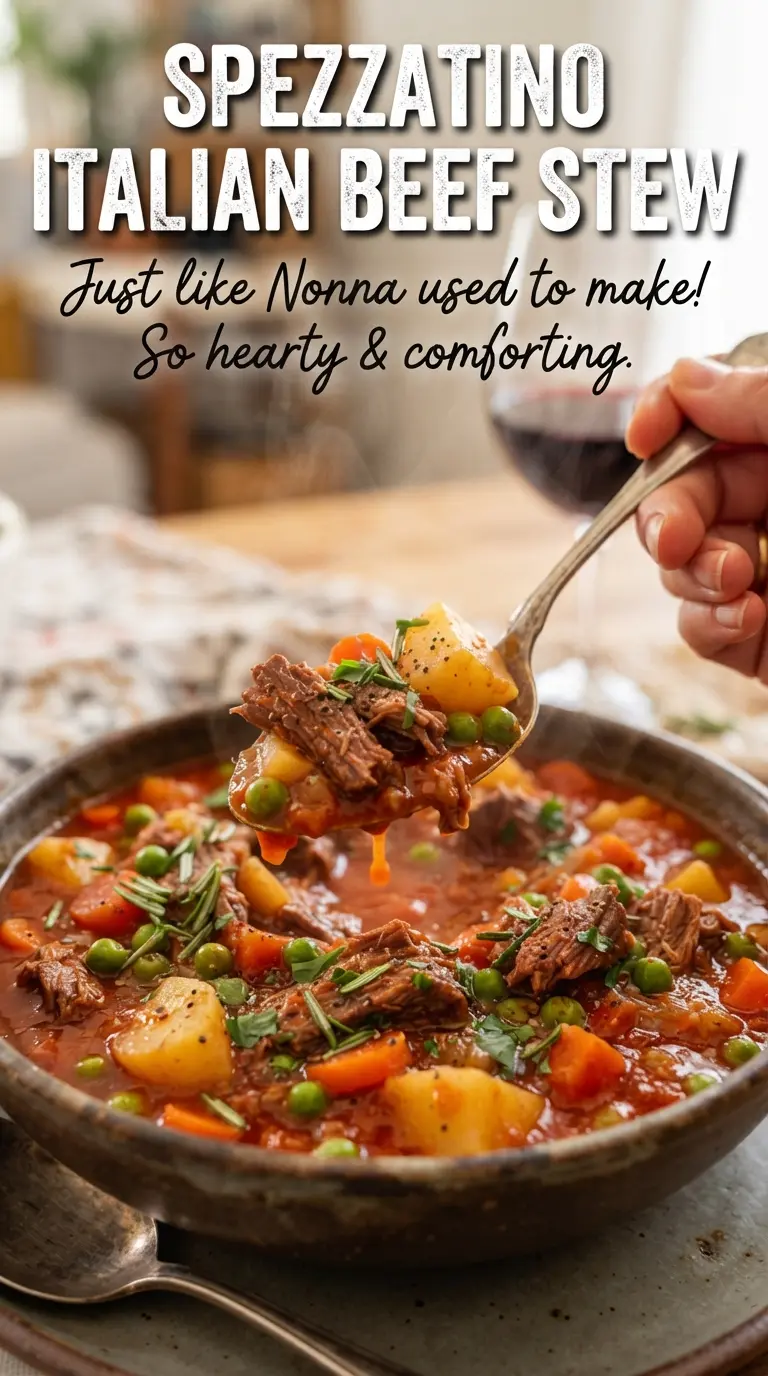
- Beef chuck — This is the cut that gives you the soft, spoon-tender texture spezzatino needs. Chuck has enough connective tissue to turn silky during a long simmer; leaner cuts dry out or stay chewy. Cut it into even 1 1/2-inch cubes so it cooks at the same pace.
- Flour — A light dusting helps the beef brown and gives the broth a little body. You don’t need much, and you don’t want a heavy coating, just enough to help the sauce cling later. If you need a gluten-free version, use a small amount of cornstarch only after browning by whisking it into cold broth before it goes in.
- Dry red wine — This adds depth and acidity that plain broth can’t give you. Use something dry and drinkable, not sweet, because the wine reduces and its character concentrates. If you don’t cook with wine, replace it with extra beef broth plus 1 tablespoon red wine vinegar for brightness.
- Crushed tomatoes — These create the body of the sauce without making it chunky or heavy. Crushed tomatoes work better here than diced because they melt into the braising liquid and coat the meat and potatoes evenly.
- Rosemary and bay leaves — These are the backbone of the herb flavor, but they should stay restrained. Fresh rosemary can take over fast, so use the sprigs whole and pull them out at the end. Bay leaves add a quiet savory note that you notice most when they’re missing.
- Potatoes — Waxy or all-purpose potatoes hold their shape best in a long simmer. Starchy potatoes will thicken the stew more, but they can break down if they cook too long. Add them only after the beef has had time to soften.
- Frozen peas — They bring sweetness and a fresh finish that keeps the stew from tasting heavy. Add them at the end so they stay green and pop against the deep red sauce.
Building the Pot So the Sauce Stays Rich, Not Watery
Season and Brown the Beef First
Season the beef with salt and pepper, then dust it lightly with flour so it takes on color in the pan. Brown it in batches in hot olive oil and leave each piece alone until it releases from the pot with a deep crust. If the pan looks crowded or the beef starts to gray before it browns, pull some out and finish in a second round.
Cook the Vegetables Until They Smell Sweet
Add the onion, carrot, and celery to the same pot and cook them until they soften and start to look glossy, about 8 minutes. Those browned bits on the bottom should loosen as the vegetables sweat, which helps carry flavor through the stew. Garlic goes in at the end of this stage for just a minute; any longer and it can burn under the heat of the pot.
Reduce the Wine Before You Add the Liquid
Pour in the red wine and stir while it bubbles up, scraping the bottom clean. Let it simmer until it drops by about half so the sharp alcohol cooks off and the sauce tastes round instead of thin. This is one of the places people rush and regret it later, because under-reduced wine can leave the stew sour.
Simmer Until the Beef Gives Way
Add the tomatoes, broth, rosemary, bay leaves, and beef, then cover the pot and let it simmer gently. You want a low, lazy bubble, not a hard boil, because aggressive heat tightens the meat and reduces the broth too fast. After about 1 1/2 hours, the beef should be close to tender but not falling apart yet.
Finish with Potatoes and Peas
Stir in the potatoes and keep the stew at a steady simmer until they’re tender, about 40 minutes. The broth will thicken a little more as the potatoes cook, and that’s exactly what you want. Add the peas for the last 5 minutes, then pull out the rosemary and bay leaves before serving with crusty bread.
How to Adapt Spezzatino Without Losing Its Character
Gluten-Free Spezzatino
Skip the flour on the beef and brown it bare, then thicken the stew by letting the potatoes do more of the work. If you want a little extra body, stir 1 tablespoon cornstarch into 2 tablespoons cold broth and add it near the end. That keeps the sauce silky without changing the flavor.
No-Wine Version
Use an extra cup of beef broth and add 1 tablespoon red wine vinegar or 2 teaspoons balsamic vinegar at the same point where the wine would go. You won’t get the same depth, but you will still get the acidity that keeps the stew from tasting flat.
Make It Dairy-Free and Naturally Gluten-Free
This stew already fits both of these if you use a gluten-free flour or skip the flour entirely. There’s no dairy in the base recipe, so the main thing is to choose a broth that’s labeled gluten-free if that matters for your table.
Storage and Reheating
- Refrigerator: Keeps well for 4 days. The sauce thickens and the potatoes soften a little more as it sits.
- Freezer: Freezes well for up to 3 months, though the potatoes will be softer after thawing. Cool completely before freezing in airtight containers.
- Reheating: Warm it slowly on the stove over medium-low heat with a splash of broth or water if needed. Don’t boil it hard, or the beef tightens and the potatoes can break apart.
The Things That Trip People Up With This Dish
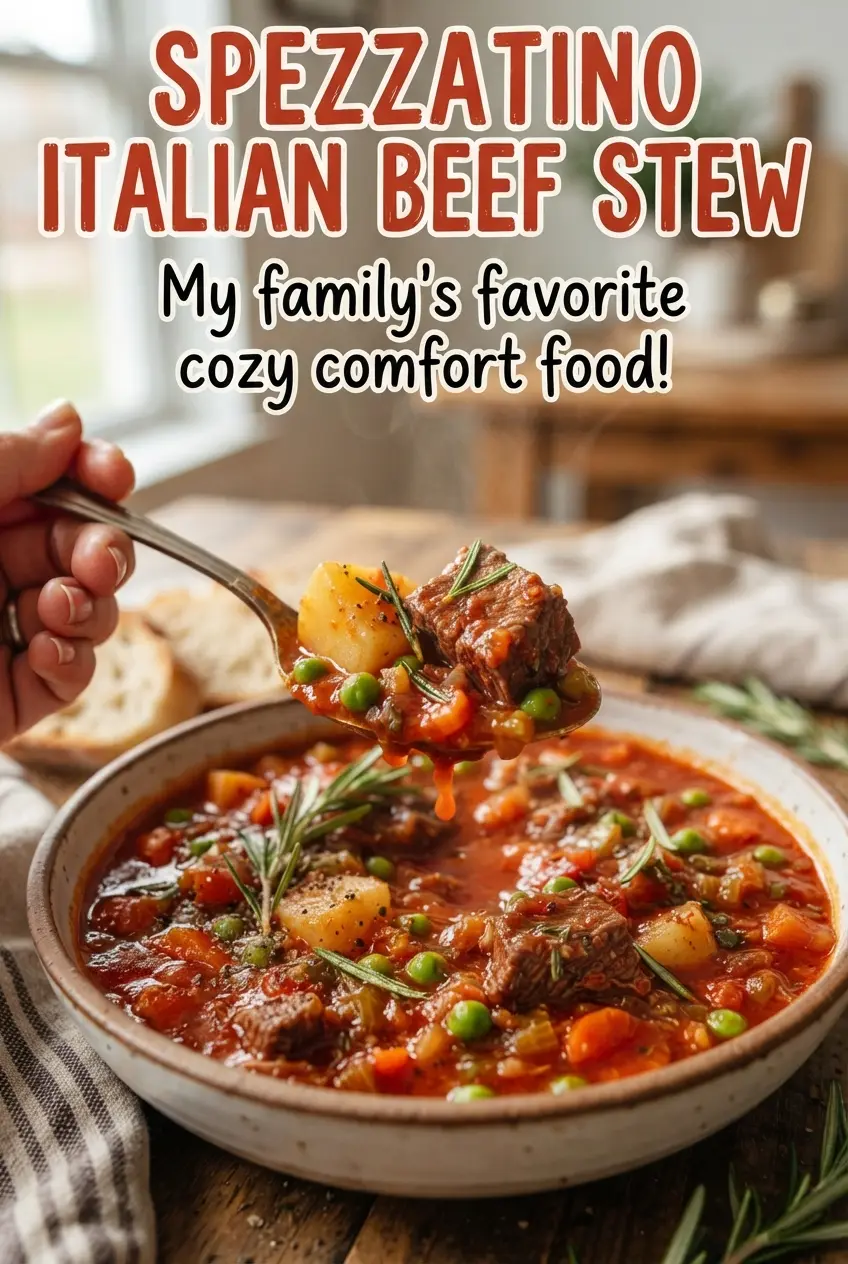
Spezzatino Italian Beef Stew
Ingredients
Equipment
Method
- Season the beef chuck with salt and black pepper. Dust the beef with all-purpose flour so the cubes are lightly coated for browning.
- Heat olive oil in a Dutch oven over medium-high heat. Brown the beef in batches for 3-4 minutes per batch until deeply browned, then transfer to a plate (avoid crowding so it sears).
- Reduce heat to medium and add the onion, carrot, and celery to the Dutch oven. Cook for 8 minutes until soft, stirring and scraping browned bits from the bottom.
- Add the garlic and cook for 1 minute until fragrant. Keep it moving so it doesn’t darken.
- Pour in the dry red wine and simmer for 5-8 minutes until reduced by half, scraping the bottom. You should see the liquid thicken slightly and the fond dissolve.
- Add the crushed tomatoes, beef broth, rosemary, bay leaves, and the browned beef. Bring to a simmer, cover, and simmer for 1 1/2 hours until the beef is becoming tender.
- Add the cubed potatoes and return to a simmer. Cook for 40 minutes until the potatoes are tender, stirring occasionally so nothing sticks.
- Stir in the frozen peas for the last 5 minutes. Cook just until bright green and heated through.
- Remove the rosemary and bay leaves before serving. Serve the spezzatino hot with crusty bread.