Warm dough wrapped around a roasting stick turns into a crackly, golden cinnamon roll-up with a soft center and just enough toasted edges to taste like a dessert cooked outdoors on purpose. The butter melts into the spirals, the cinnamon sugar clings to every ridge, and the glaze drips down while the dough is still warm enough to soften it into a sweet finish. It’s the kind of campfire treat that disappears fast because it feels a little playful and tastes like you put in far more effort than you did.
The trick is in the rotation. Dough held too close to the flames browns before the center cooks, and dough left still on the stick can sag or scorch on one side. A simple breadstick or biscuit dough works because it stays sturdy enough to wrap without tearing, and the melted butter gives the cinnamon sugar something to stick to before the heat sets the outside.
Below, I’ll walk you through the little details that keep these from burning on the outside and staying doughy in the middle, plus the easiest way to get a glaze that drizzles instead of disappearing into the crust.
The dough cooked all the way through and the cinnamon sugar made this taste like a campfire cinnamon roll instead of just plain bread. My kids loved brushing on the butter and the glaze thickened up perfectly once it sat for a minute.
These campfire cinnamon roll ups are the sweet, smoky dessert to pin for your next fire-ring night.
The Real Trick Is Keeping the Dough Off the Flames
Campfire desserts fail when the heat is too aggressive for the food you’re trying to cook. These roll-ups need steady radiant heat, not a direct blast from the fire. The outside will look tempting long before the center is set, so the goal is a slow, constant turn that lets the dough cook through evenly.
The spiral wrap matters too. If the dough is packed too tightly on the stick, the inside can stay raw where the layers overlap. Leave a little space between the turns so the heat can reach the dough all the way around, and watch for a dry, lightly crisp surface with no wet patches hiding in the folds.
- Constant rotation keeps one side from charring before the middle has a chance to cook.
- Medium distance from the fire gives you golden dough instead of blackened sugar.
- Loose spirals help the center bake instead of steaming.
- A brief cool-down keeps the glaze from sliding off the second it hits the pastry.
What Each Ingredient Is Actually Doing in This Dessert
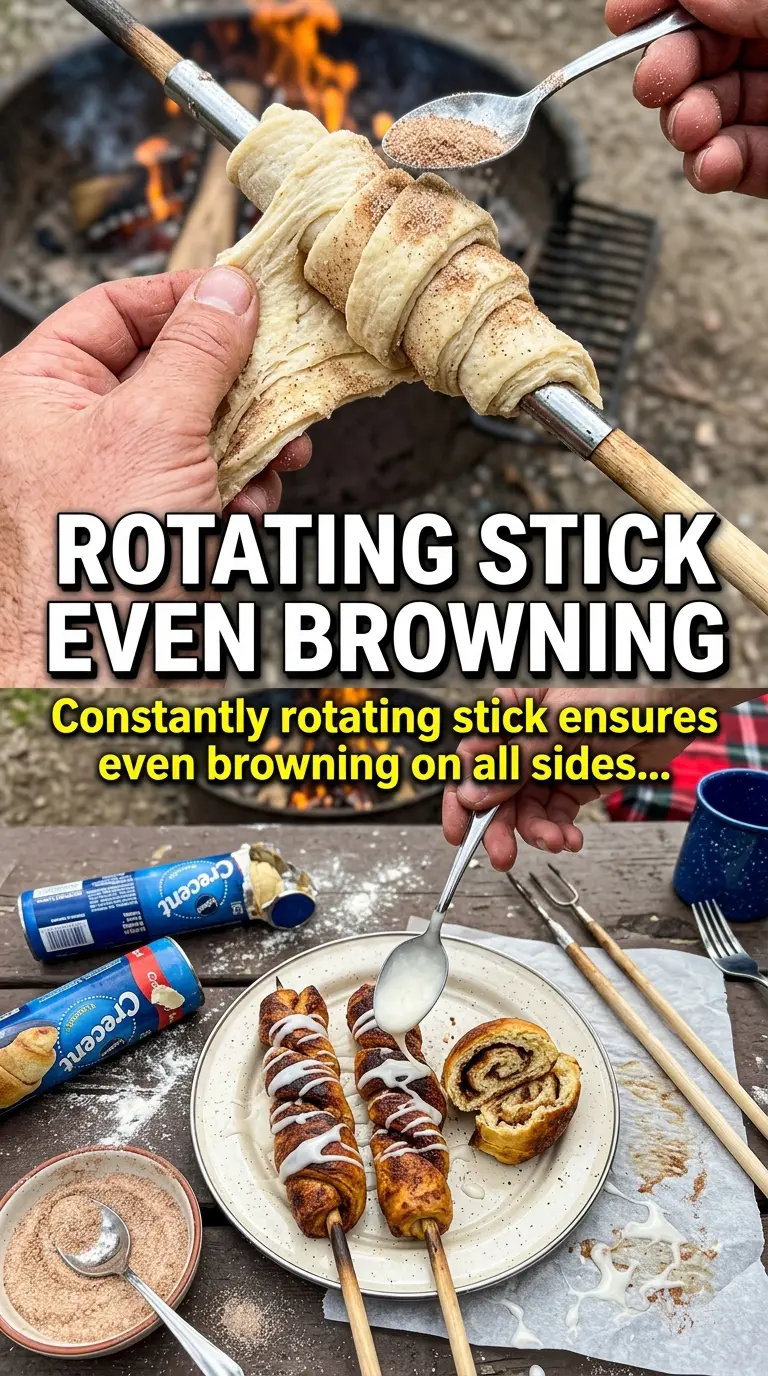
The breadstick dough is the backbone here because it stretches cleanly around the stick and holds its shape as it cooks. Biscuit dough works too, but it bakes up a little more tender and less spiraled, so the final texture leans softer and more biscuit-like. If the dough feels sticky, a light dusting of flour on your hands makes the wrapping easier without changing the result.
Butter is what helps the cinnamon sugar cling and caramelize. Melted butter is better than softened butter because it brushes on fast and coats the dough evenly, especially when you’re working outdoors. The cinnamon sugar can be store-bought or homemade, and either one works as long as the sugar is fine enough to stick instead of sliding off in dry granules.
The glaze is there for sweetness and contrast, not structure. Powdered sugar gives you that smooth drizzle, and milk loosens it just enough to pour over warm pastry. Add the milk a little at a time; if it gets too thin, it runs off before it sets.
- Refrigerated breadstick dough — Stays sturdy on the stick and bakes faster than most homemade doughs. Biscuit dough is the best swap if that’s what you have, but expect a softer, puffier finish.
- Melted butter — Helps the cinnamon sugar stick and gives the outside a toasted, bakery-style finish.
- Cinnamon sugar — This is the flavor layer, so use enough to coat the spirals all the way around. If you’re mixing your own, start with a 1:4 ratio of cinnamon to sugar.
- Roasting sticks — A long-handled stick keeps your hands safely away from the fire and gives you control over the rotation. Clean, food-safe skewers or proper roasting forks work best.
- Powdered sugar and milk — The glaze should be thick enough to drape, not soak in. Whole milk gives a richer drizzle, but any milk works.
How to Wrap, Roast, and Glaze Them Without Losing the Center
Wrapping the Dough in a Clean Spiral
Separate the dough into individual pieces first so each one cooks evenly. Wrap each piece around the end of the roasting stick in a spiral, pressing gently so it holds without squeezing the layers flat. If the dough tears, patch it with a little overlap rather than restarting, because small gaps will close as the dough expands over heat. Keep the spiral even from top to bottom so the thickest part doesn’t stay raw while the thinner end overcooks.
Brushing on the Butter and Sugar
Brush the dough with melted butter before you add the cinnamon sugar. That order matters, because dry sugar won’t cling as well and tends to fall into the fire. Coat the surface generously, especially on the outer edges of the spiral where the heat hits first. If the butter is too hot, let it cool for a minute so it doesn’t start softening the dough before it reaches the fire.
Roasting Over the Fire
Hold the stick over campfire flames, but not right in the hottest part of the fire. Rotate constantly for 8 to 10 minutes until the outside is golden brown and the dough feels set rather than floppy. If the sugar starts to darken too quickly, lift the stick higher and slow the turn so the heat evens out. The finished dough should feel light, dry to the touch, and cooked through at the thickest point.
Finishing With Glaze
Slide the roll up off the stick and let it cool for 2 minutes. That short rest keeps the glaze from melting straight off and gives the crumb a chance to firm up just enough to handle. Stir the powdered sugar and milk until smooth, then drizzle over the warm pastry while it’s still slightly soft. If you want a thicker glaze, add less milk; if you want a thinner finish, add it a teaspoon at a time.
How to Adapt These for Different Camps, Tastes, and Diets
Use Biscuit Dough Instead of Breadstick Dough
Biscuit dough makes a softer, puffier roll up with a slightly richer crumb. It still wraps well, but the layers won’t look quite as neat, and the inside may need an extra minute over the fire because biscuit dough is thicker. If you like a more bread-like chew, stick with breadstick dough.
Make Them Dairy-Free
Use a plant-based butter and swap the milk in the glaze for an unsweetened non-dairy milk. The glaze will still set and drizzle well, though the flavor stays a little cleaner and less rich than the original. This is the easiest change to make without affecting the structure.
Make a Bigger Batch for a Group
This recipe doubles cleanly if you have enough roasting sticks and fire space. Mix the glaze in a larger bowl and keep the finished roll ups on a tray so they don’t cool too fast. The only real challenge is managing the fire, because crowding too many sticks over one hot spot leads to uneven browning.
Storage and Reheating
- Refrigerator: Store leftovers in an airtight container for up to 2 days. The sugar coating softens and the outside loses its crispness, which is normal.
- Freezer: They don’t freeze well after roasting because the texture gets dense and gummy when thawed.
- Reheating: Warm in a 300°F oven for a few minutes until just heated through. The biggest mistake is microwaving them hard, which turns the dough rubbery and melts the glaze into a sticky puddle.
Answers to the Questions Worth Asking
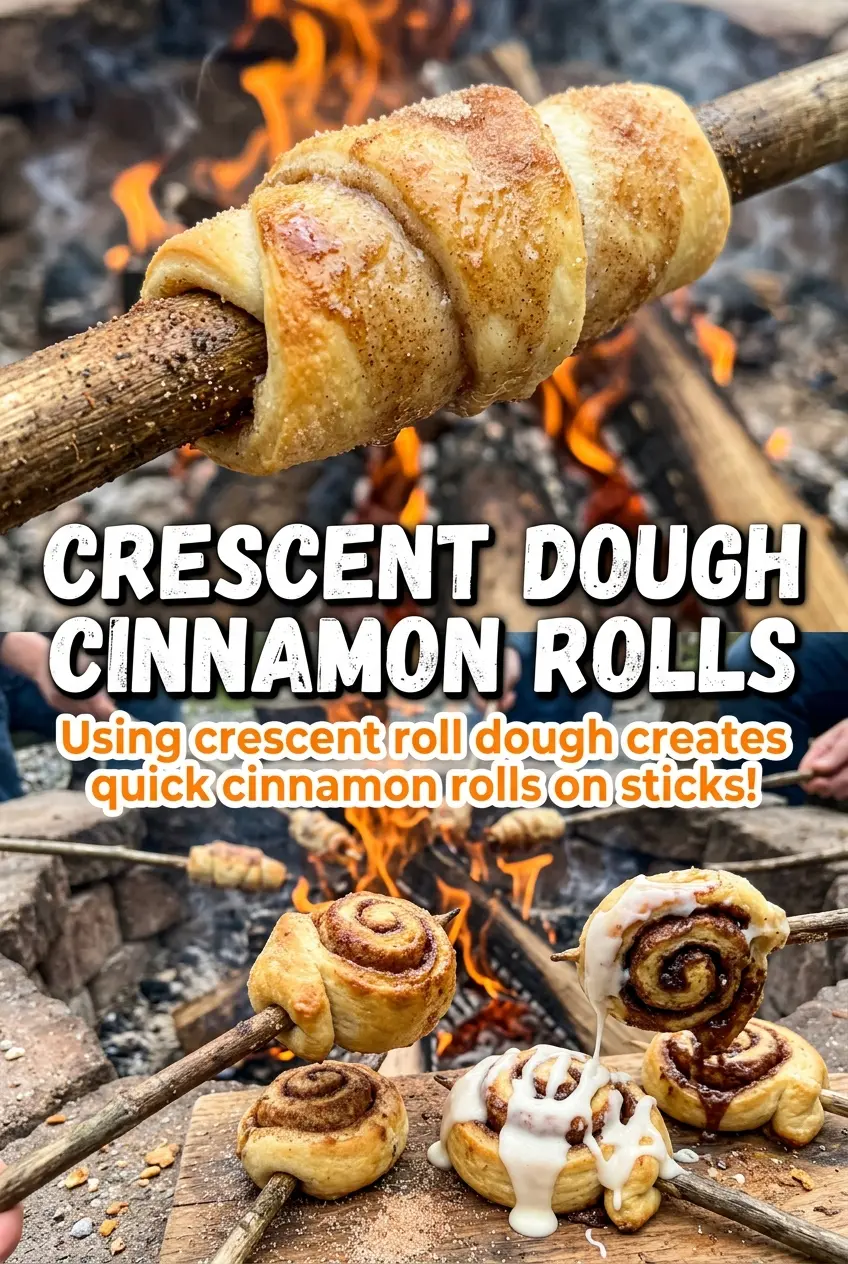
Campfire Cinnamon Roll Ups On A Stick
Ingredients
Equipment
Method
- Separate the breadstick dough into individual pieces. Keep them close to the stick size so each spiral bakes evenly.
- Wrap each dough piece around the end of a roasting stick in a spiral pattern. Leave small gaps so the dough can cook through and brown.
- Brush each roll up with melted butter. Coat the spiral evenly so it turns glossy while roasting.
- Sprinkle cinnamon sugar over the buttered dough. Add a light, even layer so it caramelizes instead of clumping.
- Hold the roll ups over the campfire and rotate constantly for 8-10 minutes until golden brown and cooked through. Keep them close enough to brown, but not so close they burn before the center cooks.
- Slide the roll ups off the stick and let cool for 2 minutes. This sets the crust enough to prevent tearing.
- Mix powdered sugar and milk for glaze, then drizzle over warm roll ups. Serve immediately while the glaze is fluid and drips slightly.